Exploring Infantry Fighting Vehicles: Tracked Vs. Wheeled
Today, we’re diving deep into the world of Infantry Fighting Vehicles (IFVs), exploring the key differences between tracked and wheeled IFVs and how these differences impact their roles and effectiveness on the battlefield.
Tracked Ifvs: Built For Tough Terrains
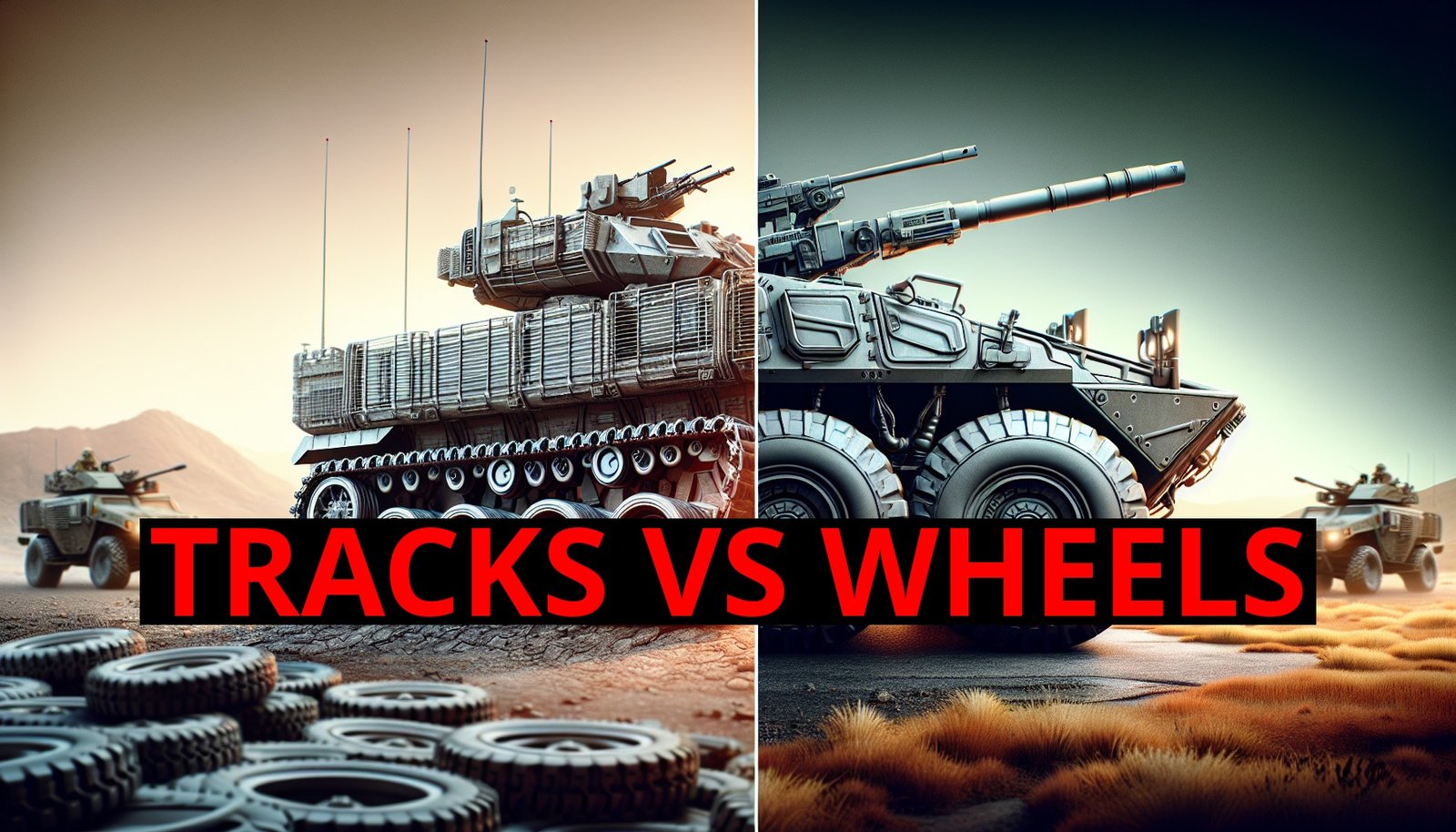
Tracked IFVs are designed to handle challenging terrains and provide reliable support in various combat scenarios. They can support more weight, allowing them to carry heavier armor and larger weapons, enhancing their protection and firepower capabilities. Tracks distribute the vehicle’s weight more evenly, offering superior traction and mobility in difficult environments such as mud, sand, and snow, making tracked IFVs ideal for operations requiring extensive off-road travel.
Advantages of Tracked IFVs:
– Superior Traction: Tracks distribute weight evenly, providing excellent mobility in tough terrains.
– Enhanced Stability: Lower center of gravity reduces rollover risks.
– Robust Armor: Harder targets due to lower silhouette and enhanced protection.
– Maneuverability: Ability to pivot on the spot for superior maneuverability in tight spaces.
These features highlight why tracked IFVs are integral to military operations requiring durability and versatility in challenging terrains.
Wheeled Ifvs: Speed And Agility
On the other hand, we have the agile wheeled IFVs. These vehicles are ideal for urban environments and paved roads, where their speed and maneuverability are unmatched. They can rapidly reposition and navigate through city streets, making them excellent for urban warfare and quick response missions. Their efficiency on roads reduces crew fatigue and enhances operational mobility, allowing for swift movements and tactical flexibility.
Advantages of Wheeled IFVs:
– Cost Efficiency: Lower fuel consumption and simpler mechanics make them cheaper to repair.
– Strategic Mobility: Lighter weight allows for easier air transport and rapid deployment.
– Urban Adaptability: Superior maneuverability in urban settings.
Roles And Deployment
Tracked IFVs:
– Essential in armored divisions, they operate seamlessly with main battle tanks in challenging terrains.
– Uniform mobility and cohesion allow tracked IFVs to keep pace with tanks, providing mutual support and maintaining effectiveness in frontline combat.
Wheeled IFVs:
– Used in mechanized and motorized infantry units where speed and agility are paramount.
– Suited for reconnaissance, rapid troop transport, and urban operations.
– Provide a flexible and cost-effective option for environments with paved roads and urban infrastructure.
Strategic And Logistical Considerations
The decision to use tracked versus wheeled IFVs is largely influenced by strategic and logistical considerations. Tracked IFVs are integrated into armored divisions to ensure uniform mobility and support for main battle tanks, creating a cohesive and highly protected force capable of handling the most challenging terrains and frontline engagements.
On the other hand, wheeled IFVs are chosen for mechanized and motorized units due to their speed, cost-efficiency, and adaptability to urban and road environments, making them ideal for rapid deployment and versatile operations.
Conclusion
Understanding the strengths and limitations of both tracked and wheeled IFVs is essential for effective military planning and deployment. Tracked IFVs offer unmatched terrain versatility and survivability, making them integral to armored divisions alongside main battle tanks. Wheeled IFVs, with their superior speed and cost-efficiency, are optimal for mechanized and motorized units operating in urban and road environments.
The choice between the two types of IFVs is driven by broader strategic and logistical needs rather than individual mission requirements, ensuring optimal performance and effectiveness on the battlefield.
If you found this article insightful, don’t forget to share it and leave a comment with your thoughts! Stay tuned for more content on military strategy and technology from Strategic Warfare.