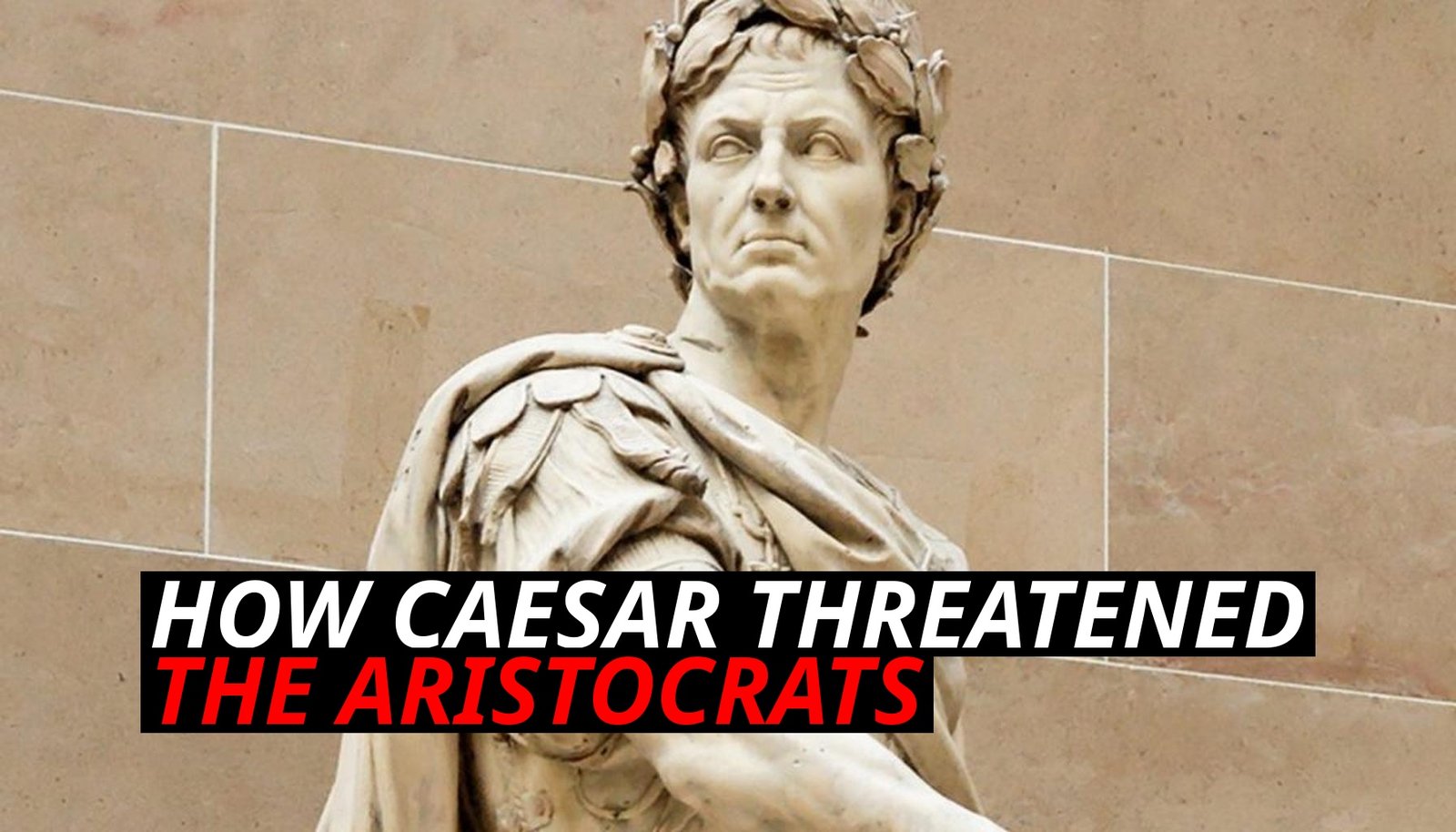
Julius Caesar wasn’t just a military genius or a political strategist—he was also a master of populism. At a time when the Roman Senatorial elite controlled wealth and power, Caesar broke from the aristocratic tradition by appealing directly to the common people. His ability to connect with ordinary Romans, soldiers, and the urban poor made him a hero to the masses, but a threat to the Senate, who viewed his rising popularity as a dangerous challenge to their dominance. Caesar’s brand of populism, which aimed to upend entrenched power structures, has echoes in modern political movements where charismatic leaders seek to mobilize popular support against established elites.
Caesar And The People: Champion Of The Disenfranchised
At a time when the gap between rich and poor in Rome was growing ever wider, Caesar positioned himself as a champion of the people. Through his policies of land redistribution, debt relief, and his push to extend citizenship to Rome’s allies in the provinces, Caesar sought to address the inequalities that the Senatorial class had long ignored. His reforms directly benefited soldiers, veterans, and the urban poor, who had been left behind by the wealthy landowners who controlled the Senate.
Caesar’s populist approach wasn’t just about policy—it was also about image. He was known for his extravagant public games, his distribution of grain to the poor, and his ability to speak to the people in a way that made them feel seen and valued. While many Roman elites were distant and focused on maintaining their own wealth, Caesar embraced the spectacle of Roman public life, using it to build a loyal base of supporters. For ordinary Romans, Caesar wasn’t just another politician—he was their advocate in a political system that rarely considered their needs.
The Aristocracy’S Fear: A Challenge To Their Control
To the Senatorial elite, Caesar’s populism was deeply unsettling. The Senate was dominated by a few wealthy families, who had maintained control over Roman politics for centuries. They were used to a system in which power was passed through elite networks and patronage, not through appeals to the masses. Caesar’s decision to bypass these traditional power structures and speak directly to the people represented a fundamental threat to their authority.
For the Senate, Caesar’s popularity wasn’t just a challenge to their political power—it was a threat to the entire social order. The Roman elite believed in the idea of mos maiorum—the customs of their ancestors—and they viewed Caesar’s populism as a rejection of these traditional values. His growing influence among the people gave him the power to undermine the Senate, reducing it to a ceremonial body while he effectively ruled through the support of the masses.
The Senate’s fear of Caesar wasn’t just rooted in the idea that he was gaining too much power—it was also a fear that his rise would dismantle the hierarchical system that had kept the aristocracy at the top of Roman society. If Caesar could appeal directly to the people and use that support to enact reforms, the Senate’s role as the gatekeeper of political power would be over.
Populism And The Roman Military
One of the most significant aspects of Caesar’s populism was his ability to rally the support of the military, particularly his loyal legions. Caesar’s reforms, such as his promise of land for veterans, ensured that he had the unwavering loyalty of the soldiers who had fought under him. This created a dangerous dynamic for the Senate, as Caesar’s personal relationship with the army meant that he could wield military power without the Senate’s consent.
The Senate, traditionally reliant on the military for defense but fearful of it as a political tool, was deeply alarmed by Caesar’s ability to command an army that was more loyal to him than to Rome. His decision to cross the Rubicon in 49 BCE, defying the Senate’s orders to disband his legions, was the ultimate expression of his populist power. By using his popularity with both the people and the military, Caesar was able to challenge the authority of the Senate directly, leading to a civil war that would ultimately bring an end to the Republic.
Parallels To Modern Populism
Caesar’s rise to power through populism has striking parallels to modern political movements. Just as Caesar appealed to the disenfranchised masses who felt neglected by the elite, many modern populist leaders have gained power by mobilizing support from ordinary citizens who feel ignored by traditional political institutions. These leaders often present themselves as outsiders willing to challenge entrenched elites and bring real change, much like Caesar positioned himself against the Senate.
Both in Caesar’s time and in modern populist movements, there is a deep distrust of established institutions. In ancient Rome, Caesar’s supporters viewed the Senate as corrupt and self-serving, more concerned with protecting the wealth of the elite than with governing for the good of the people. Similarly, many modern populist movements are fueled by anger toward institutions that are perceived as being out of touch with the needs of ordinary citizens.
However, populism also comes with its risks. In both ancient and modern contexts, populism can lead to the concentration of power in the hands of a single leader. Caesar’s populism ultimately paved the way for his rise as dictator for life, signaling the end of the Roman Republic. In this sense, Caesar’s story serves as both an example of the power of populism and a warning of its potential to undermine democratic institutions.
The Legacy Of Caesar’S Populism
Caesar’s populist appeal and the fear it generated among the Roman aristocracy played a key role in the collapse of the Roman Republic. His ability to rally the people to his side gave him the power to defy the Senate, while his reforms threatened the traditional social and political hierarchies that had governed Rome for centuries. For the Senate, Caesar’s rise represented the loss of their monopoly on power and the beginning of a new era in Roman politics—one that would be defined by emperors rather than elected officials.
While Caesar’s assassination in 44 BCE was an attempt to stop his populist rise, it was too late to save the Republic. His death only accelerated the shift toward autocratic rule, as his nephew Octavian—later known as Augustus—would go on to consolidate power and establish the Roman Empire.
In the end, Caesar’s populism changed Rome forever, challenging the aristocratic control of politics and leaving a legacy of power derived from the will of the people. His rise serves as a powerful reminder of how populist leaders can reshape political landscapes by appealing directly to the masses, and how the fear of change can drive entrenched elites to drastic measures in order to protect their power.