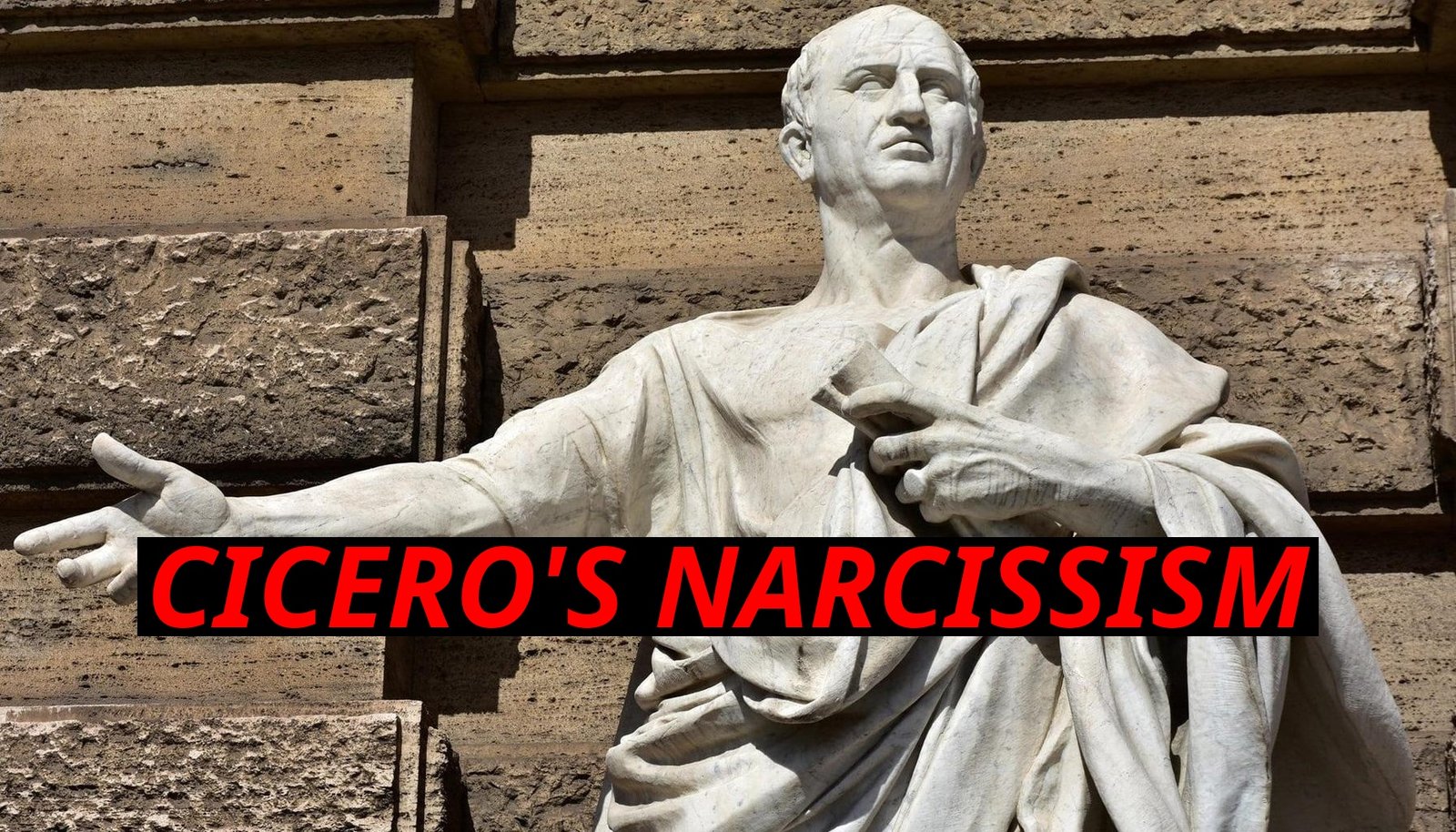
Marcus Tullius Cicero—brilliant orator, philosopher, and staunch defender of the Roman Republic—is often hailed for his intellectual contributions and eloquent speeches. But beneath his polished rhetoric and lofty ideals lay a deep-seated flaw: his narcissism. Cicero’s belief in his own indispensability, his moral superiority, and his overconfidence in his ability to control others, like the young Octavian, would prove to be his undoing.
How did a man of such immense talent and intelligence fall so spectacularly in the brutal world of Roman politics? Let’s delve into the psychological traits that shaped Cicero’s political decisions and how his inflated sense of self-importance ultimately led to his tragic demise.
The Narcissistic Belief In Indispensability
Cicero’s political career was defined by his unwavering belief that he, more than anyone else, was the savior of the Roman Republic. His early success in exposing and quashing the Catiline Conspiracy in 63 BCE bolstered his sense of indispensability. Cicero believed that he alone had the wisdom, integrity, and rhetorical skill to preserve the Republic from internal decay and external threats.
- The Hero Complex: Cicero saw himself as the “father of the fatherland,” a title he embraced after his role in thwarting Catiline’s coup. This success cemented his self-image as the Republic’s guardian, leading him to overestimate his importance in Rome’s political sphere. Cicero came to believe that without him, Rome would inevitably fall into tyranny.
- The Republic’s Moral Compass: Cicero’s sense of moral superiority made him believe that he was not only politically indispensable but also morally indispensable. He cast himself as the Republic’s conscience, standing against corruption, populism, and autocracy. Yet, this moral absolutism blinded him to the fact that the political landscape was changing, and his rigid adherence to the old ways made him seem out of touch with the realities of power.
Cicero’S Overconfidence In Manipulating Octavian
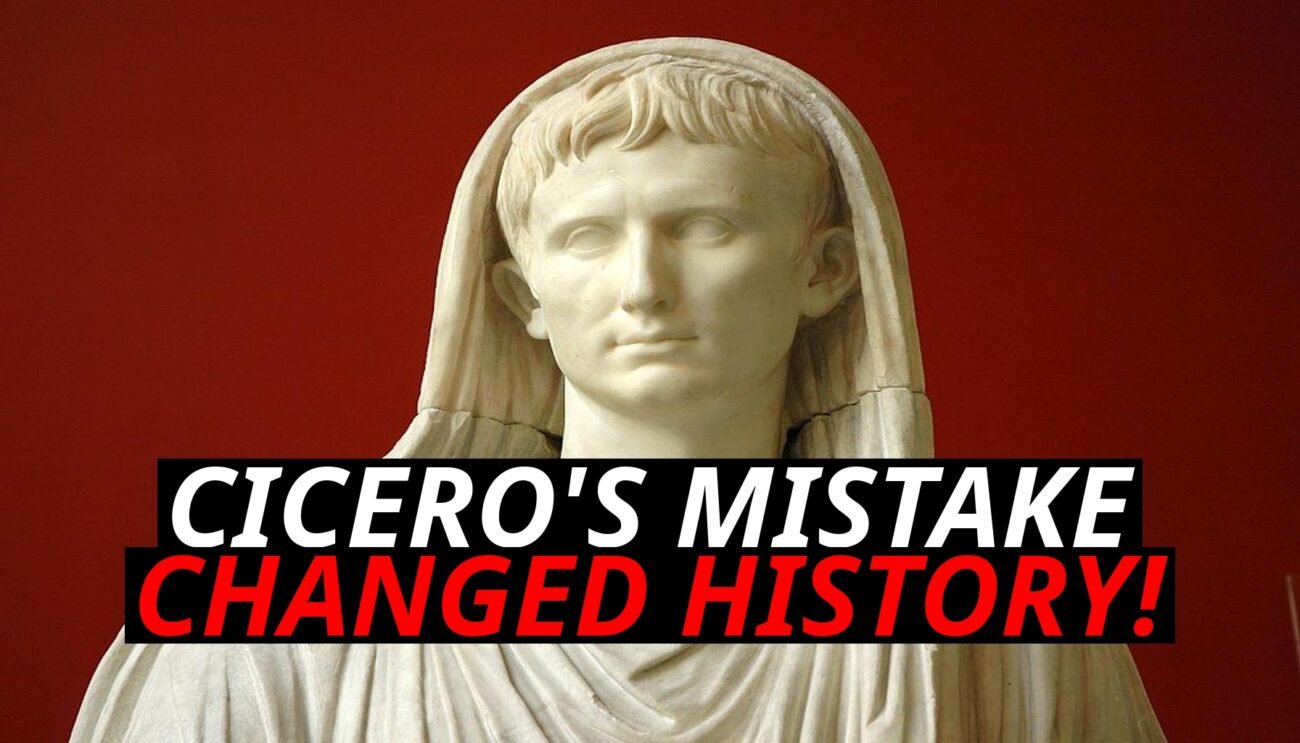
One of the clearest examples of Cicero’s overconfidence—and ultimately his fatal miscalculation—was his attempt to manipulate Gaius Octavian (the future Augustus). After Julius Caesar’s assassination in 44 BCE, Cicero saw the rise of Mark Antony as the greatest threat to the Republic. Cicero believed that by propping up the young and inexperienced Octavian, he could use him as a pawn to defeat Antony and restore the Senate’s power.
- Misreading Octavian’s Ambition: Cicero famously referred to Octavian as someone to be “praised, honored, and then discarded.” He believed he could control the young heir of Caesar, using his influence to steer Octavian toward the Senate’s goals. What Cicero failed to see was that Octavian had his own ambitions—ambitions far greater than Cicero realized. Far from being a malleable tool, Octavian was positioning himself for ultimate control of Rome.
- The Fatal Miscalculation: Cicero’s attempt to use Octavian against Antony backfired spectacularly. Instead of being the puppet Cicero envisioned, Octavian outmaneuvered both Cicero and the Senate by forming an alliance with Antony and Lepidus in the Second Triumvirate. This alliance led to the proscriptions, a political purge that targeted Cicero among others. Cicero’s overconfidence in his ability to manipulate Octavian ultimately led to his name appearing on the list of enemies to be eliminated.
Cicero’S Moral Superiority: A Double-Edged Sword
Cicero’s strong sense of moral superiority was another factor that contributed to his downfall. He believed himself to be the embodiment of Roman virtues—honesty, justice, and duty. While this gave him a powerful platform to oppose figures like Julius Caesar and Mark Antony, it also made him inflexible and dismissive of those who didn’t share his ideals.
- Alienating Potential Allies: Cicero’s moral absolutism often led him to alienate potential allies. His attacks on Antony in the _Philippics_ were not just political but deeply personal. Cicero portrayed Antony as a corrupt, immoral figure who was unworthy of leading Rome. While these speeches were rhetorically brilliant, they further entrenched Antony’s animosity toward Cicero, making reconciliation impossible.
- A Blind Spot for Practical Politics: Cicero’s sense of moral superiority also blinded him to the pragmatic realities of Roman politics. He saw the political arena as a battleground for ideals, but in reality, it was a battleground for power. While Cicero viewed himself as the Republic’s moral guardian, leaders like Caesar, Antony, and Octavian understood that power—not virtue—was the key to survival. Cicero’s refusal to engage in realpolitik left him vulnerable to those who were more willing to play the ruthless game of Roman politics.
Cicero’S Narcissism And Overestimation Of Control
Throughout his political career, Cicero overestimated his ability to control events and people. He believed that his rhetorical skill and intellectual brilliance could steer Rome away from chaos. This overestimation of control was evident in several key moments of his career.
- The Catiline Conspiracy: Cicero’s handling of the Catiline Conspiracy gave him a sense of invincibility. His speeches denouncing Catiline were powerful, and his decision to execute the conspirators without trial was framed as an act of decisive leadership. However, this action later contributed to his exile, as it was viewed by many as an overreach of power. Cicero’s belief that he could control the narrative ultimately backfired.
- The Misjudgment of Antony: Cicero’s scathing _Philippics_ against Antony were another example of his overconfidence. Cicero believed that his oratory alone could destroy Antony’s political career and restore the Republic. But instead of weakening Antony, the speeches only fueled his determination to eliminate Cicero. Cicero’s belief that he could control the political conversation with rhetoric alone proved to be a fatal error.
The Fall Of Cicero: A Lesson In Hubris
In the end, Cicero’s narcissism—his belief in his own indispensability, his moral superiority, and his ability to manipulate others—led directly to his fall. When the Second Triumvirate came to power, Cicero’s enemies finally had the opportunity to silence him. His name was added to the proscription lists, and in 43 BCE, he was captured and executed. His severed hands and head were displayed in the Roman Forum as a grim reminder of the dangers of political miscalculation.
- The Price of Overconfidence: Cicero’s belief that he could navigate the treacherous waters of Roman politics without adjusting to the realities of power cost him his life. While his speeches and ideals were noble, they could not save him from the brutal political environment of Rome. Cicero’s fall serves as a powerful reminder that even the most brilliant individuals can be undone by their own hubris.
- A Lasting Legacy Overshadowed: Cicero’s philosophical and rhetorical contributions to Western thought are undeniable, but his political career is often remembered for its tragic end. His narcissism not only fueled his ambition but also led to his ultimate downfall, overshadowing his intellectual achievements with the story of a man who believed too much in his own invulnerability.
Conclusion: Cicero’S Narcissism And Political Demise
Cicero’s political career offers a fascinating study in how narcissism can fuel ambition but also lead to destruction. His belief in his own indispensability, his moral absolutism, and his overconfidence in controlling others—particularly Octavian—were key factors in his fall. Cicero’s tragic end reminds us that even the most talented and intelligent individuals can be undone by their own inflated sense of self-worth.
In the world of Roman politics, where power was paramount, Cicero’s reliance on his rhetorical brilliance and moral superiority left him vulnerable to those who understood the true rules of the game. While his intellectual legacy endures, Cicero’s downfall serves as a cautionary tale about the dangers of hubris in the political arena.