Imagine standing in a crowd of passionate environmental activists, holding signs demanding a greener future through plant-based diets and electric vehicles (EVs). The message is clear: eat less meat, drive more electric, and we’ll save the planet. But what if, beneath all the slogans and idealism, there’s a serious oversight—one that’s not only being ignored but may actually be harming the environment more than helping it?
Welcome to the world of monocropping and EV battery production, two industries that are rarely scrutinized by the very activists who champion them. Let’s explore how these hidden environmental costs are being overlooked and why it’s time to rethink the solutions we’ve been sold.
Monocropping: The Dark Side Of Plant-Based Diets
Plant-based diets have become synonymous with the green movement. From veggie burgers to soy milk, activists push these products as ethical, eco-friendly alternatives to animal agriculture. But there’s a dirty little secret hiding in those plant-based fields—monocropping.
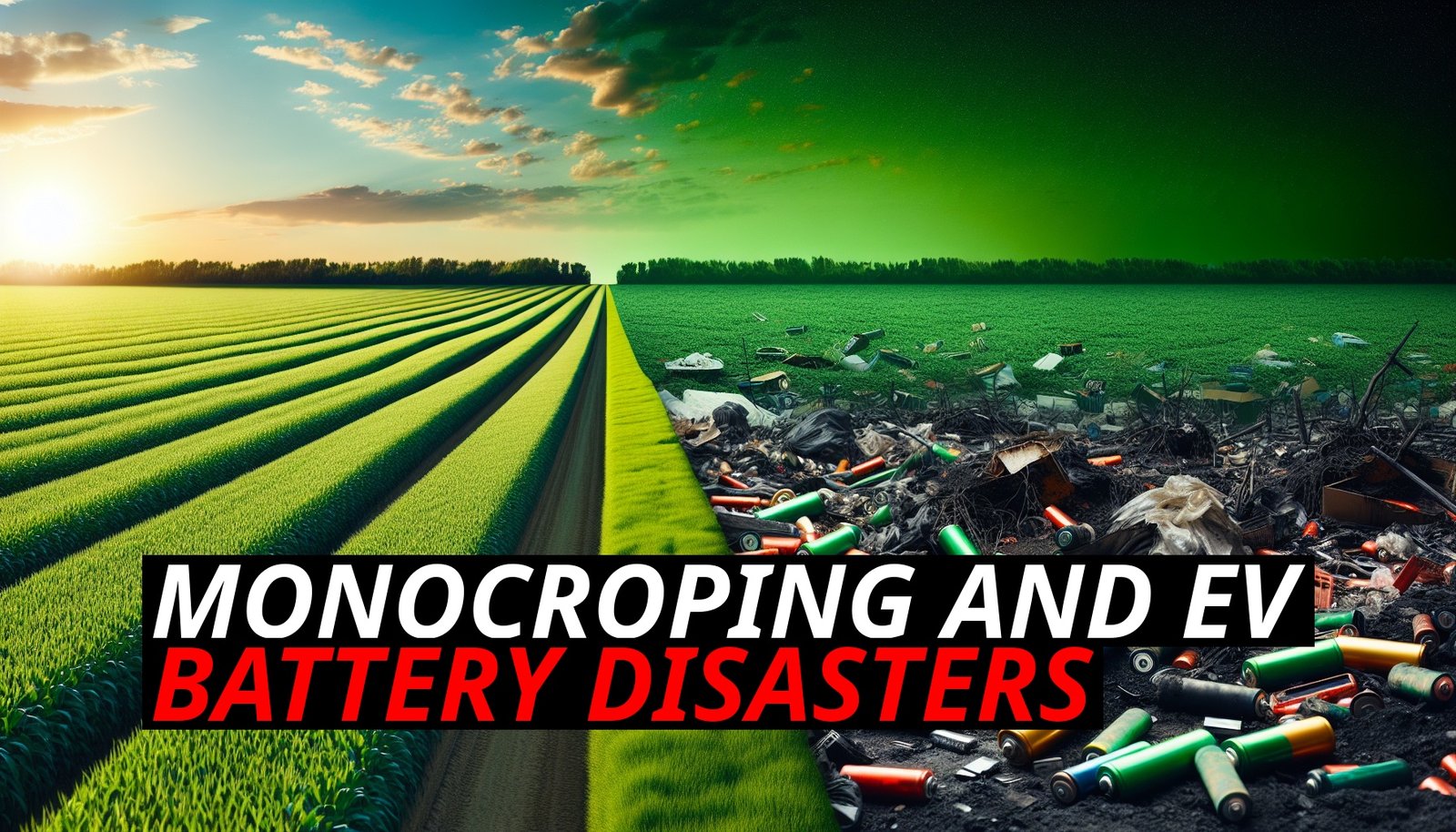
What Is Monocropping? Monocropping refers to the practice of growing a single crop, like soy or corn, over vast areas of land year after year. It’s a common practice used to produce the ingredients for many plant-based meat substitutes and processed foods. While this method is efficient for producing large quantities of crops, it comes with major environmental downsides.
Soil Depletion and Chemical Dependence: One of the biggest problems with monocropping is that it depletes soil health. Without crop rotation or biodiversity, the soil loses its nutrients, making it less fertile over time. To compensate, farmers often turn to chemical fertilizers, which can lead to soil degradation and contribute to water pollution when runoff enters rivers and streams. It’s a vicious cycle: monocropping destroys the soil, and chemical fertilizers destroy the environment.
Loss of Biodiversity: In monocropped fields, biodiversity disappears. Instead of supporting a variety of plants, insects, and animals, these fields become barren, sterile landscapes where only a single crop is allowed to grow. This loss of biodiversity affects ecosystems, leading to a decline in pollinators like bees and a reduction in wildlife habitat. Ironically, while plant-based products are sold as environmentally friendly, they often come from practices that reduce biodiversity—one of the cornerstones of a healthy ecosystem.
The Overlooked Consequences: Environmental activists rarely highlight the environmental costs of monocropping. While they promote plant-based diets as a solution to climate change, they often overlook the fact that the crops used to produce these products can be just as damaging—if not more so—than traditional farming. It’s a case of ignorance by omission, where the narrative of green solutions is presented without the full picture.
The Hidden Cost Of Electric Vehicle Batteries
Electric vehicles are often hailed as the future of transportation, a key to reducing greenhouse gas emissions and transitioning away from fossil fuels. But there’s a significant downside that activists often ignore: the production of EV batteries.
The Environmental Toll of Battery Production: EVs rely on lithium-ion batteries, which are made using materials like lithium, cobalt, and nickel. These materials don’t magically appear—they’re extracted through mining, and the environmental impact of this mining is profound.
Lithium Mining’s Environmental Destruction: Lithium, a key component of EV batteries, is primarily extracted from salt flats in South America and Australia. The extraction process involves pumping vast amounts of water into the ground to create a brine that contains lithium. In regions where water is already scarce, this can deplete local water supplies, threatening agriculture and the livelihood of local communities. Furthermore, lithium mining can lead to soil contamination and air pollution, creating a new set of environmental challenges that don’t fit neatly into the green agenda.
Cobalt and Human Costs: Cobalt is another crucial element in EV batteries, and it’s mined under troubling conditions in countries like the Democratic Republic of Congo. Cobalt mining has been linked to human rights abuses, including child labor, as well as severe environmental degradation. While environmental activists focus on the benefits of EVs, these ethical and environmental costs are frequently left out of the conversation.
Limited Battery Recycling Options: Once an EV battery reaches the end of its life, recycling becomes a major issue. Current battery recycling technology is expensive and inefficient, meaning that many batteries end up in landfills, where they can leach toxic chemicals into the soil and water. Without a sustainable plan for recycling these batteries, the environmental impact of EVs could outweigh their benefits in the long run.
Ignoring The Bigger Picture: Environmental Activism’S Blind Spots
The environmental movement has done incredible work raising awareness about climate change and the need for sustainable solutions. But when it comes to issues like monocropping and EV battery production, there’s a disconnect between the message and the reality.
Oversimplified Narratives: Activists often present oversimplified solutions—switch to plant-based diets, drive electric vehicles, and the planet will be saved. But these narratives ignore the complex realities of agriculture and battery production. While the intentions behind promoting plant-based products and EVs are noble, the real-world impact of these solutions is far more complicated than the slogans suggest.
Virtue Signaling Over Practical Solutions: In many cases, environmental activism has become more about virtue signaling than about solving real problems. By focusing on the most visible, trendy solutions, like plant-based diets and EVs, activists can claim moral high ground without addressing the unintended consequences of these products. It’s easier to promote a meatless burger than to discuss the environmental impact of monocropping or to push EVs without acknowledging the human and environmental costs of battery production.
What Are The Practical Solutions?
So, what’s the answer? If monocropping and EV battery production aren’t the silver bullets they’re made out to be, where do we go from here?
Regenerative Agriculture: Instead of relying on monocropping, a shift toward regenerative agriculture could provide a more sustainable solution. Regenerative farming practices emphasize biodiversity, crop rotation, and soil health, allowing farms to sequester carbon, support ecosystems, and reduce reliance on chemical fertilizers. By focusing on holistic farming methods, we can produce food that’s better for both the environment and human health.
Sustainable Battery Technology: For EVs to be truly green, we need better ways to recycle batteries and more sustainable methods for sourcing materials. Investing in battery recycling infrastructure and supporting ethical mining practices can help mitigate the environmental and social costs of EV production. Furthermore, continued research into alternative battery technologies, like solid-state batteries, could reduce the need for environmentally destructive materials like cobalt.
Local Solutions, Not Global Mandates: Finally, environmental solutions need to be localized. One-size-fits-all mandates—whether it’s promoting fake meat or EVs—ignore the diverse needs of different regions and communities. Encouraging local food production, supporting regional energy solutions, and allowing consumers to choose what works best for their circumstances will create more sustainable, adaptable outcomes than broad mandates from global environmental organizations.
Conclusion: Time To Rethink Our Green Assumptions
It’s time to acknowledge that not all green solutions are created equal. While environmental activists push for plant-based diets and electric vehicles, the reality is that these solutions come with significant environmental costs of their own—costs that are too often ignored in the rush to appear eco-friendly.
By confronting the true impacts of monocropping and EV battery production, we can begin to develop more practical, sustainable solutions that don’t just look good on paper but actually work for the planet. It’s time to move beyond the surface-level rhetoric and start addressing the deeper issues that will truly make a difference in the fight against climate change.