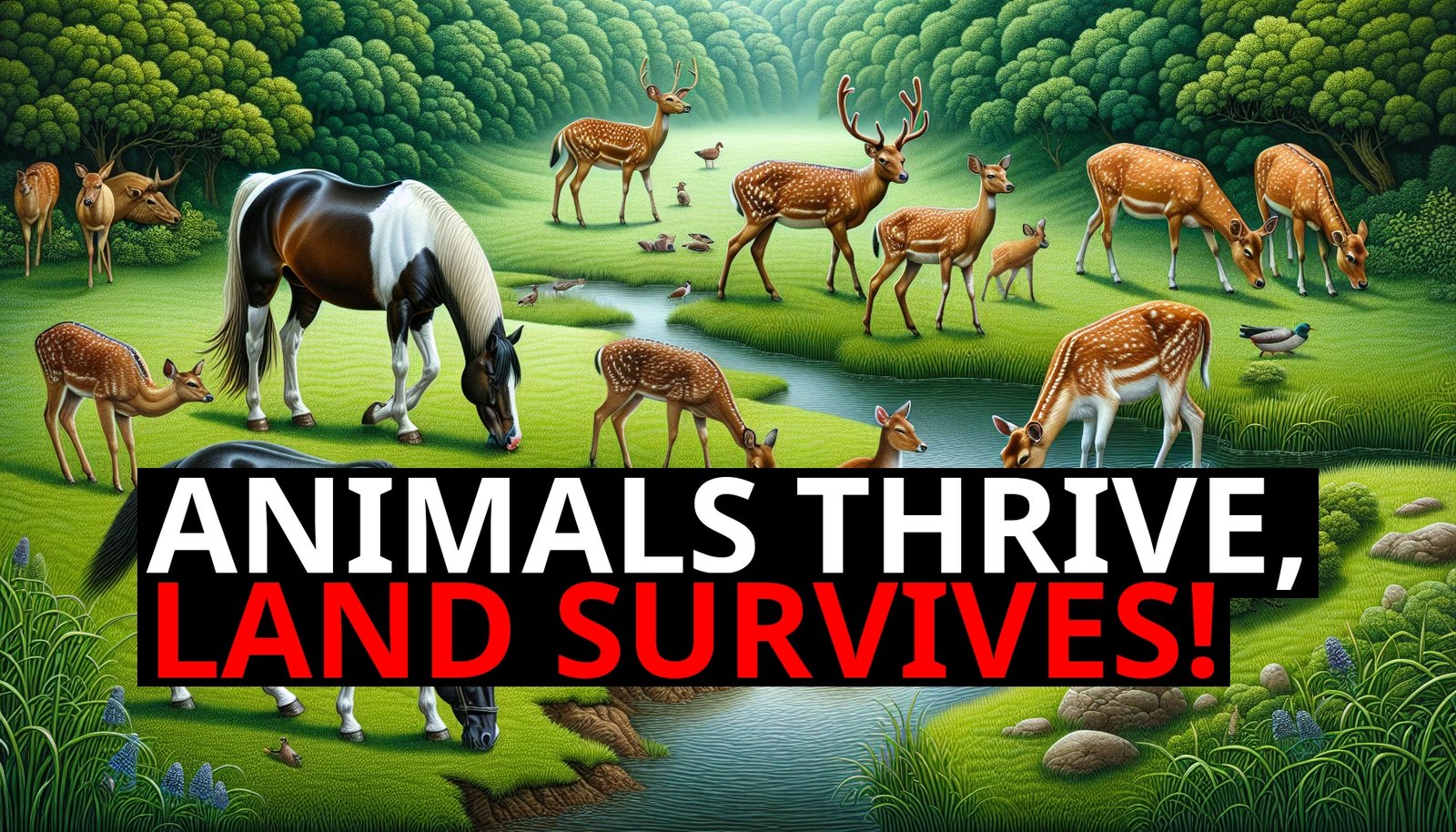
Picture a ship floating gently on water, traveling across the surface without taking from or damaging the sea. Grazing animals interact with the land in much the same way—they graze across landscapes without depleting or consuming the land. Instead, they coexist with their environment, maintaining the balance of ecosystems and even helping to restore and rejuvenate the land. This stands in stark contrast to other forms of agriculture, like monoculture farming, which strip the land of nutrients and leave it degraded.
Let’s explore how grazing animals function like ships on water and the ways holistic grazing and regenerative agriculture can lead to healthier landscapes and more sustainable food systems.
Grazing Animals: Coexisting With The Land
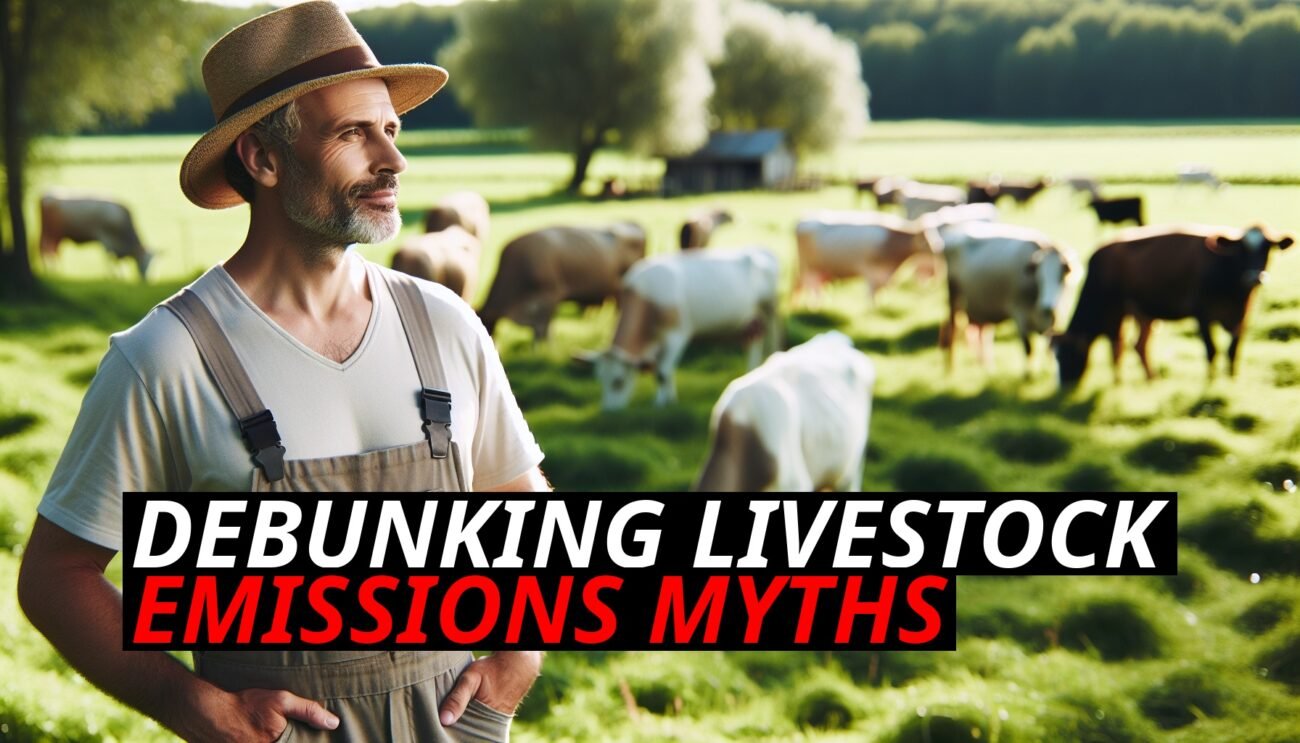
Unlike intensive farming practices, where the land is tilled, planted, and harvested in ways that exhaust the soil, grazing animals have evolved to coexist harmoniously with their environment. Just as a ship floats on water, grazing animals move across pastures, taking only what they need and contributing to the health of the ecosystem in the process.
Grazing animals, such as cattle, sheep, and goats, feed on grasses and other vegetation in a way that stimulates plant growth rather than depleting it. Their grazing keeps grasses trimmed, promoting new growth and preventing overgrowth, which can suffocate plant life and reduce biodiversity. Additionally, by moving across different areas of land, grazing animals spread seeds, fertilize the soil with their manure, and aerate the ground with their hooves.
This natural grazing behavior maintains the health of grasslands and other ecosystems, keeping them vibrant and productive without depleting resources. Rather than consuming the land, these animals help maintain the balance of nature, encouraging plant diversity and soil health.
Holistic Grazing: Mimicking Nature’S Patterns
The idea that grazing animals can harm the land often comes from observing poorly managed grazing systems, where animals are left to graze too long in one area, leading to overgrazing. However, when managed properly, grazing can have the opposite effect—regenerating the land rather than degrading it.
This is where holistic grazing comes in. Holistic grazing is a method that mimics the natural movement patterns of wild herbivores. In nature, large herbivores like bison or antelope move continuously across vast areas, never staying in one place long enough to overgraze it. They eat, fertilize the soil, and move on, allowing the land to rest and recover.
Holistic grazing replicates this pattern by rotating livestock between different paddocks or sections of pasture. By moving the animals regularly, no single area is overused, and the land has time to regenerate between grazing sessions. This approach allows farmers to:
- Boost Soil Health: The brief, intense grazing followed by rest periods helps build organic matter in the soil, improving its structure and fertility.
- Promote Plant Diversity: Holistic grazing prevents one type of plant from dominating, encouraging a mix of grasses, herbs, and shrubs to thrive.
- Increase Water Retention: By improving soil structure, holistic grazing enhances the land’s ability to retain water, reducing runoff and drought stress.
Holistic grazing shows that livestock can be part of the solution, not the problem, when it comes to sustainable land management.
Regenerative Agriculture: Healing The Land Through Grazing
Regenerative agriculture takes the concept of holistic grazing a step further. This farming practice focuses on regenerating and healing the land by working with natural systems rather than against them. Regenerative agriculture recognizes that grazing animals are essential players in building healthy ecosystems and that they can help restore degraded land.
Through regenerative grazing, farmers aim to improve the health of the soil, which is the foundation of any thriving ecosystem. Healthy soil is full of life, from microbes and fungi to insects and worms. This living soil acts as a sponge, soaking up carbon from the atmosphere, retaining water, and providing nutrients to plants. Grazing animals contribute to this process by adding organic matter through their manure, aerating the soil with their hooves, and encouraging plant growth through grazing.
Some of the key benefits of regenerative grazing include:
- Carbon Sequestration: Healthy soils can absorb and store large amounts of carbon dioxide, helping to mitigate the effects of climate change.
- Biodiversity Restoration: By promoting a variety of plant species, regenerative grazing helps support a diverse range of wildlife, from pollinators like bees to ground-nesting birds.
- Water Cycle Improvement: By increasing the soil’s ability to retain water, regenerative grazing reduces the risk of drought and flooding, creating more resilient ecosystems.
In this way, regenerative agriculture leverages the power of grazing animals to heal degraded land and create sustainable food systems that support both the environment and human needs.
The Destructive Alternative: Monoculture Farming
While grazing animals coexist with the land and contribute to ecosystem health, the same can’t be said for monoculture farming. Monoculture farming is the practice of growing a single crop over vast areas of land, year after year. While it’s efficient in terms of producing high yields, it comes with significant environmental drawbacks.
Monoculture farming depletes the soil by stripping it of nutrients, leading to soil erosion and desertification. Without diverse plant life, monoculture farms become fragile ecosystems that rely on synthetic fertilizers and pesticides to remain productive. These chemicals, in turn, pollute waterways and harm local wildlife.
In contrast to regenerative grazing, which promotes biodiversity, monoculture farming reduces it. Large fields of a single crop provide little habitat for wildlife, and the use of pesticides kills off beneficial insects and pollinators. Over time, monoculture farming leaves the land less fertile, less diverse, and more vulnerable to environmental stressors.
By comparing monoculture farming to regenerative grazing, it becomes clear that grazing animals are not the problem. In fact, they may be the solution to creating sustainable, resilient ecosystems that support both agriculture and biodiversity.
Grazing Animals As Environmental Allies
The idea that grazing animals harm the land is based on outdated practices and misunderstandings. When managed correctly, grazing animals act as environmental allies, helping to maintain healthy ecosystems and restore degraded land. Much like ships floating on water, these animals coexist with their surroundings, interacting in ways that enhance the health of the land without consuming or depleting it.
By adopting practices like holistic grazing and regenerative agriculture, we can harness the power of livestock to create sustainable food systems that support the health of our planet. Grazing animals, far from being destructive, play an essential role in regenerating the landscapes they inhabit, creating a brighter, more resilient future for both people and the environment.
Conclusion: Floating On Land, Not Consuming It
Grazing animals, like ships floating on water, don’t “use up” the land—they interact with it in ways that promote balance and sustainability. When properly managed through holistic grazing and regenerative agriculture, livestock can help heal ecosystems, improve soil health, and restore biodiversity.
As we look for ways to create a more sustainable and regenerative food system, it’s time to rethink how we view grazing animals. Rather than seeing them as land consumers, we should recognize them as valuable partners in maintaining the health of our planet, ensuring that the land remains productive for generations to come.